
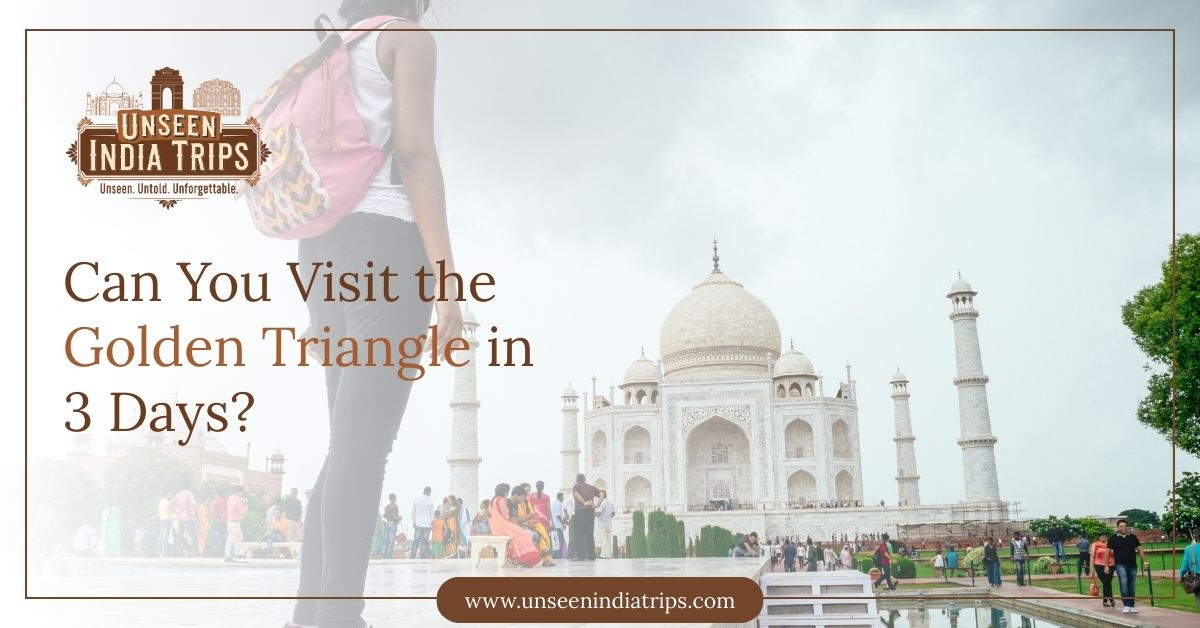
The Golden Triangle—Delhi, Agra, and Jaipur—represents India’s most popular tourist circuit, offering magnificent Mughal and Rajput architecture, rich history, and vibrant culture within relatively compact geography. Many travellers with limited time wonder whether three days suffice for meaningful exploration or whether such compressed timing reduces the experience to a rushed checklist. The honest answer: yes, you can physically visit all three cities in three days through efficient golden triangle tour 3 days packages, but the experience involves trade-offs between depth and breadth, comfort and efficiency, that require understanding before committing to this accelerated pace.
The Practical Reality: What’s Possible
A three-day Golden Triangle tour is feasible given the distances involved. Delhi to Agra measures approximately 200 kilometres (3-4 hours by car via the Yamuna Expressway or 2-3 hours by train). Agra to Jaipur spans 240 kilometres (4-5 hours by car). Jaipur to Delhi covers 280 kilometres (5-6 hours by car). Total driving time across three days reaches approximately 12-15 hours—significant but manageable when spread across the itinerary.
Thousands of travellers complete this circuit in three days annually, returning home with photographs of the Taj Mahal, Amber Fort, and Qutub Minar—the highlight monuments justifying the Golden Triangle’s fame. Tour operators offer numerous golden triangle tour 3-day packages specifically designed for this timeframe, indicating market demand and operational viability.
However, “possible” differs substantially from “ideal.” Three days means seeing headline attractions while necessarily skipping secondary sites, experiencing cities superficially rather than deeply, and spending considerable time in vehicles transitioning between destinations. Understanding these limitations allows for realistic expectations rather than disappointment when the experience feels rushed.
Sample Three-Day Itinerary
Day 1: Delhi
Early morning arrival or departure from the Delhi hotel (6:00-7:00 AM). Major Delhi attractions requiring visits:
- Qutub Minar (1.5 hours)
- Humayun’s Tomb (1 hour)
- Drive past India Gate and Parliament House (30 minutes)
- Red Fort exterior viewing or quick interior visit (30-45 minutes)
- Jama Masjid and a brief Old Delhi tour (1 hour)
- Optional: Lotus Temple or Akshardham if time permits
This compressed itinerary covers Delhi’s major highlights in approximately 6-8 hours, including travel time between monuments. By mid-afternoon, depart for Agra (3-4 hours), arriving in the evening. Check into the Agra hotel, have dinner, and rest for the next day’s early start.
Day 2: Agra to Jaipur
Wake before dawn (4:30-5:00 AM) for a sunrise visit to the Taj Mahal. Enter at sunrise (approximately 6:00 AM), spend 2-3 hours at the monument. Return to the hotel for breakfast (9:00-10:00 AM).
Check out and visit Agra Fort (1.5 hours), then depart for Jaipur via Fatehpur Sikri. Stop at Fatehpur Sikri for 1.5-2 hours exploring the abandoned Mughal capital. Continue to Jaipur (another 2-3 hours), arriving late afternoon or early evening.
Evening at leisure in Jaipur—perhaps visit local markets or rest at the hotel, preparing for the final full day.
Day 3: Jaipur to Delhi
Early start (7:00 AM) for Amber Fort visit (2-3 hours, including elephant ride or jeep transfer up the hillside). Return to the city for a quick visit to the City Palace (1 hour) and a photo stop at the Hawa Mahal (15-20 minutes from outside—entry requires significant additional time).
Optional additions if time permits: Jantar Mantar observatory, Albert Hall Museum, or shopping at local bazaars. Afternoon departure for Delhi (5-6 hours), arriving in the evening. Tour concludes with Delhi drop-off at the airport or hotel.
This itinerary demonstrates what three days accommodate: major monuments in each city, meaningful but limited time at each, and substantial daily driving. It’s intensive, requiring early starts, long days, and accepting that you’ll leave many sites unvisited while spending considerable time in vehicles.
What You’ll Miss
Three-day limitations mean sacrificing depth for breadth. In Delhi, you’ll miss experiences like:
- Chandni Chowk market exploration and street food tour
- Lodi Gardens for peaceful walks
- Crafts Museum showcasing traditional Indian arts
- More than cursory Old Delhi experiences
- Akshardham or other modern temples (if not included)
- Any evening cultural performances or sound-and-light shows
In Agra, you’ll skip or rush:
- Itimad-ud-Daulah (Baby Taj), with exquisite inlay work
- Mehtab Bagh sunset Taj Mahal views
- Local markets for marble handicrafts
- Comprehensive Agra Fort exploration (larger than one hour allows)
- Any relaxed dining experiences or cultural interactions
In Jaipur, you’ll necessarily omit:
- Nahargarh Fort sunset views over the city
- Albert Hall Museum’s extensive collection
- Thorough shopping in the famous textile and jewellery markets
- Exploring residential pink city neighbourhoods
- Jaigarh Fort’s massive cannon and city walls
- Galtaji Temple (Monkey Temple)
- Any cultural performances (puppet shows, folk dances)
Additionally, the compressed timeframe prevents experiencing each city beyond its monuments—the street life, local cuisine beyond quick meals, cultural interactions, or simply absorbing the atmosphere that makes places memorable beyond their famous buildings.
The Advantages of Three Days
Despite limitations, three-day tours offer meaningful advantages for specific travellers:
Time-Constrained Visitors: Business travellers with a weekend, those with limited vacation days, or visitors stopping briefly en route to other destinations can see India’s most famous monuments efficiently without dedicating a week to North India alone.
Budget Efficiency: Shorter tours cost less in absolute terms (though not necessarily per-day rates). Three days of accommodations, meals, and guide services total less than week-long alternatives, making the Golden Triangle tour 3-day packages accessible to travellers with tighter budgets who must choose between brief Golden Triangle visits or skipping North India entirely.
Taster Experiences: First-time India visitors unsure about cultural adjustment can sample the country through this manageable circuit without committing to extensive stays. If you love it, you’ll return for deeper exploration. If it’s not for you, three days doesn’t feel like an excessive time investment.
Highlight-Focused Travel: Some travellers prioritize seeing famous landmarks over comprehensive cultural immersion. Three days delivers precisely this—checking must-see monuments off lists without dwelling extensively in each location. This approach suits travellers maintaining long bucket lists of global destinations, preferring broad international experience over deep engagement with single countries.
Group Coordination: When travelling with friends or family members whose vacation timing rarely aligns, three-day trips are easier to coordinate than week-long commitments. The shorter, more intensive format allows group travel when schedules permit only limited time off.
Who Should Consider Longer Timeframes
Certain traveller types benefit significantly from extending beyond three days:
Cultural Immersion Seekers: Those wanting to understand India beyond tourist sites need time for market wandering, meal lingering, interaction with locals, and absorbing daily rhythms. This requires staying multiple days per city, allowing unhurried exploration.
Photography Enthusiasts: Serious photographers need multiple visits at different times for optimal lighting, crowd-free moments, and capturing locations comprehensively. Three days of forced choosing between sleep and photography, never allowing both.
Detailed History and Architecture Students: Travellers fascinated by Mughal history, architectural evolution, or artistic techniques benefit from additional time studying monuments, hiring specialist guides, and visiting secondary sites providing context for major attractions.
Families with Children: Young children tire easily, resist rushing, and need rest breaks. Compressed schedules with long vehicle days challenge families. Extra days allowing shorter daily itineraries and child-friendly pacing make family travel far more pleasant.
Elderly Travelers: Seniors often require slower pacing, more frequent rest, and avoiding exhaustion from intensive daily activities and early starts. Additional days spread the same monuments across more relaxed schedules suitable for older travellers’ energy levels.
Those Seeking Value: Ironically, longer stays often provide better per-day value despite higher absolute costs. The daily costs of guides, drivers, and accommodations decrease with multi-day bookings, while additional time allows for discovering affordable local restaurants, markets, and experiences that quick tours must skip.
Making Three Days Work Better
If three days is your reality, several strategies maximize the experience:
Prioritize ruthlessly: Accept you cannot see everything. Identify which three or four monuments absolutely cannot be missed personally (likely including Taj Mahal, Amber Fort, and perhaps one or two Delhi sites), then build the itinerary around these non-negotiables. Be willing to sacrifice others whose interests you have less.
Start Early Every Day: Utilise morning hours when monuments are less crowded, temperatures are cooler, and the light is better for photography. This requires discipline—early bedtimes and avoiding evening activities—but dramatically improves daily experiences.
Invest in Efficient Transportation: Choose good vehicles with reliable AC and experienced drivers who know routes, manage time well, and handle logistics smoothly. The hours saved through efficient transportation get reallocated to monument time rather than vehicle breakdowns or navigation confusion.
Hire Quality Guides: At key monuments (Taj Mahal, Agra Fort, Amber Fort), excellent guides explain the significance, point out details, and manage crowds efficiently, allowing you to extract maximum value from limited time. Skip mediocre guides who just recite facts available online; seek guides recommended by reputable golden triangle tour 3 days packages or highly-rated online.
Minimise Hotel Time: While adequate rest is essential, extensive hotel lounging wastes limited time. Choose strategically-located accommodations, minimizing travel between hotels and monuments, reducing dead time in transit.
Stay Flexible: Build a slight buffer into daily schedules, allowing adjustments if something takes longer or traffic causes delays. Rigid minute-by-minute itineraries create stress when inevitable delays occur.
Focus on Experience Quality: Rather than frantically photographing everything, consciously experience key moments—sunrise at Taj Mahal, elephant ride at Amber, spice aromas in Delhi markets. Presence creates memories that photographs taken while rushing between sites never generate.
The Seven-Day Alternative
For comparison, seven days allows completely different experiences: 2 days in Delhi, 2 in Agra (including Fatehpur Sikri day trip), 3 in Jaipur (with Pushkar or other regional excursion). This pacing permits:
- Morning monument visits followed by leisurely afternoons
- Secondary sites providing context for headline attractions
- Market exploration and authentic dining
- Cultural performances and local interaction
- Genuine rest and recovery rather than constant movement
- Multiple monument visits at different times (sunrise and sunset Taj visits, for example)
The additional days fundamentally change the experience from achievement-focused (saw the monuments) to understanding-focused (learned about the places). Neither approach is wrong—they serve different priorities.
The Verdict
Can you visit the Golden Triangle in three days? Absolutely. Will you see the major monuments and have stories about visiting iconic sites? Yes. Will you deeply understand these cities, experience their culture beyond monuments, or feel unhurried? No.
Three-day tours work best for travellers with severe time constraints who prioritize efficiently seeing famous sites over cultural immersion, who are comfortable with intensive pacing, and who understand they’re choosing breadth over depth. The experience isn’t inferior—it’s different, serving specific traveller needs and priorities.
If time allows, even one or two additional days (making it 5-6 days total), the improvement in experience quality significantly exceeds the marginal time investment. But if three days is truly your limit, well-planned golden triangle tour 3-day packages deliver meaningful experiences with India’s greatest monuments while accepting that you’ll return home with a taste of North India rather than a comprehensive understanding, which may be exactly what your circumstances require.