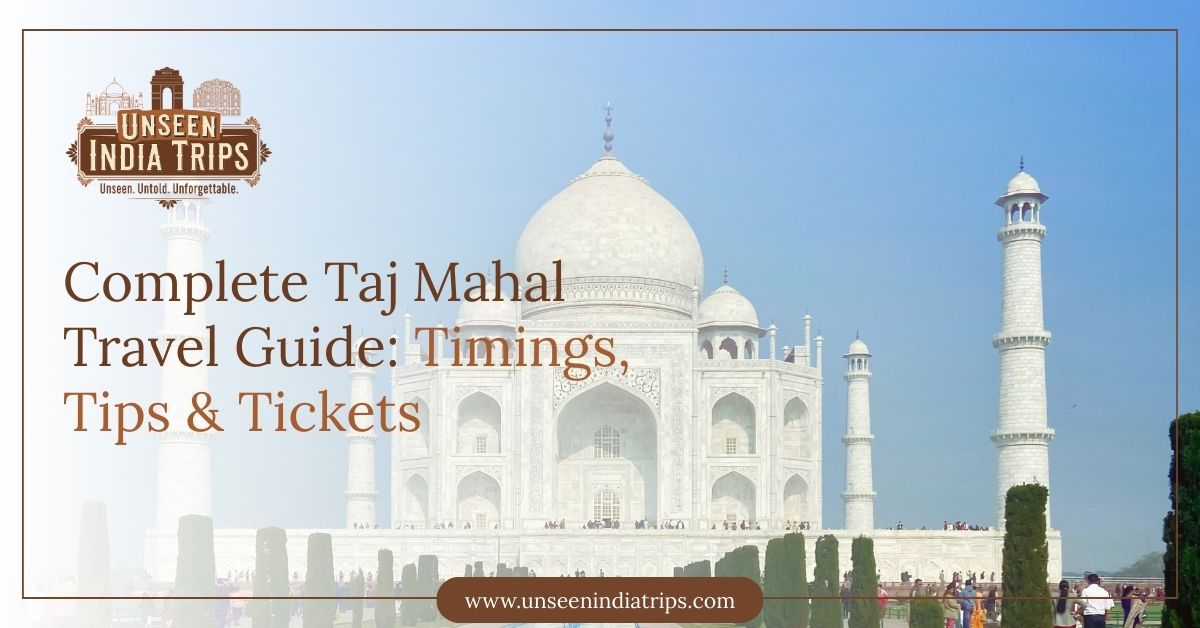
A Taj Mahal Tour by Car from Delhi remains one of the most convenient ways to visit India’s most iconic monument, giving flexibility in timing and comfort for the 3.5–4.5 hour drive each way via the Yamuna Expressway. Planning around official timings, ticket rules, and basic etiquette is essential to get the best experience while avoiding common hassles.
Location, Opening Days, and Timings
The Taj Mahal is located in Agra, Uttar Pradesh, on the banks of the Yamuna River. It is generally open from sunrise to sunset, with the main mausoleum closed to general visitors on Fridays; it is open only for Friday prayers in the mosque area.
Morning entry usually begins around first light, and last entry is a bit before sunset, with exact timings adjusted seasonally. Night viewing is permitted only on specific dates—on full moon nights and two days before and after, excluding Fridays and Ramadan.
Ticket Categories and Booking
Tickets are divided into categories for domestic, SAARC/BIMSTEC, and foreign visitors, with an additional charge for entering the main mausoleum. Buying tickets online through official portals or authorised partners is recommended to avoid queues and unauthorised touts. Children in certain age bands (often under 15) may have free or reduced entry, depending on current policy.
Visitors must carry the same ID used during online booking, as checks are standard at the entrance gates.
Best Time of Day and Season to Visit
Early morning (sunrise) offers the calmest conditions, softer light, and relatively cooler temperatures, especially in the hot months. Winter months from October to March are usually considered the best season, thanks to more pleasant weather, though there can be some fog in December–January. Late-afternoon visits can be beautiful too, but midday heat in summer and heavier crowds should be expected.
How to Reach: By Car, Train, and Bus
From Delhi, most travellers either drive or book an organised car tour using the Yamuna Expressway, covering roughly 200–230 km depending on the route. Alternatives include high-speed trains such as the Gatimaan Express or the Shatabdi from Delhi to Agra, followed by local transport to the Taj complex. Buses and shared vehicles also operate between Delhi and Agra, but generally offer less flexibility and comfort.
Security Rules and Entry Gates
There are three main gates: East, West, and (less commonly used) South Gate, with the South Gate mainly used as an exit in recent years. Strict security checks limit items such as large bags, tripods, drones, and certain food items; carrying only essentials like water, a phone, a camera, and a small bag is advised. Metal detectors and manual checks are standard, so arriving a bit early helps to avoid delays.
Dress Code and Etiquette
There is no formal dress code, but modest, comfortable clothing is recommended, with shoulders and knees reasonably covered, aligning with local norms. Shoes must be removed, or shoe covers worn, when entering certain elevated or marble areas, especially around the main plinth. Visitors are expected to keep noise to a minimum, avoid touching inlay work, and refrain from littering in the complex.
Photography Guidelines
Photography is allowed in most outside areas, but restrictions apply inside the main mausoleum, where flash or any form of video may be prohibited. Tripods and drones are not permitted inside the complex, and professional shoots require special permissions. For the best shots, travellers often combine the main complex with viewpoints such as Mehtab Bagh across the river or certain rooftops in Taj Ganj.
Night Viewing of the Taj Mahal
Night viewing tickets are limited and must usually be purchased in advance for one of the fixed time slots, each about 30 minutes. Only a small number of visitors are allowed per slot, and entry is routed through specific gates with restricted movement areas. The experience focuses mainly on viewing from a set platform rather than exploring the entire complex.
Practical Tips for a Smooth Visit
- Carry a printed or digital copy of your ticket and ID.
- Keep cash or digital payment ready for lockers, shoe covers, or small purchases.
- Hire licensed local guides only from official counters if you want commentary.
- Plan additional time for Agra Fort and Mehtab Bagh to round out your day.
Used thoughtfully, a Taj Mahal Tour by Car from Delhi can combine sunrise or sunset at the monument with stops at Agra Fort, local bazaars, and food joints, creating a full one-day or overnight itinerary that balances comfort, efficiency, and depth.