
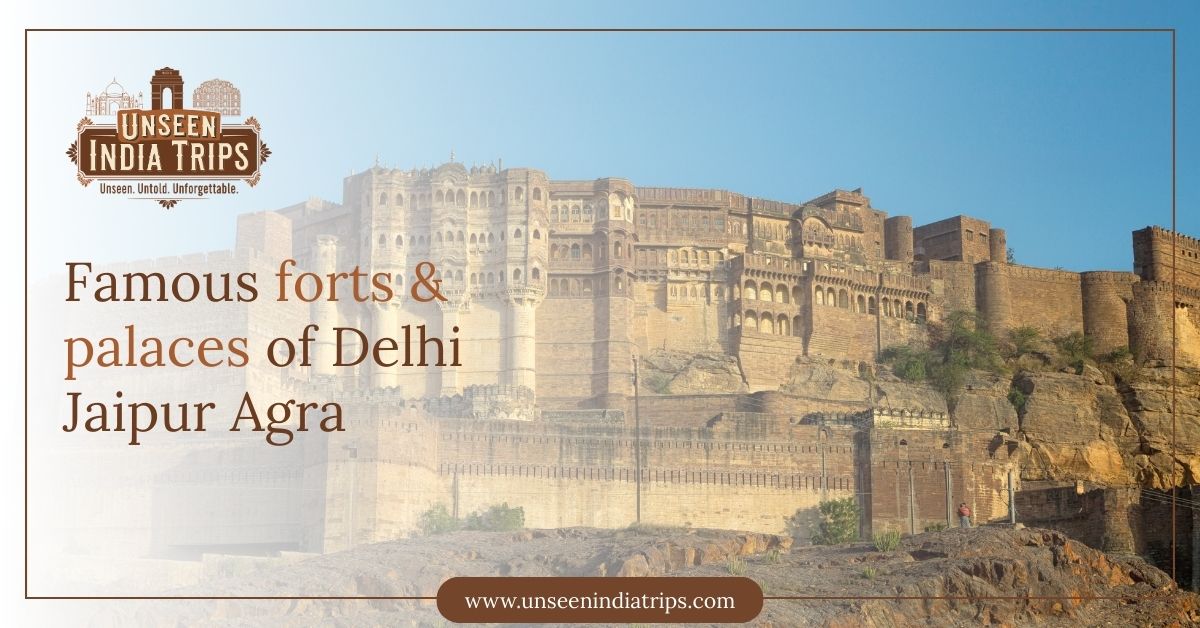
Delhi, Jaipur, and Agra form the heart of India’s Golden Triangle and are home to some of the most magnificent forts and palaces in the country. These architectural marvels reflect centuries of royal power, artistic excellence, and cultural heritage. Exploring these landmarks gives travelers a deep understanding of India’s historical evolution.
Historic Forts and Palaces of Delhi
Delhi has served as the capital of several dynasties, and its forts and palaces showcase a mix of Mughal, Sultanate, and colonial architecture.
Red Fort
A UNESCO World Heritage Site, the Red Fort stands as a symbol of Mughal authority. Built by Shah Jahan, it features massive red sandstone walls, grand halls, and intricate marble work.
Purana Qila
One of Delhi’s oldest forts, Purana Qila, reflects ancient Indo-Islamic architecture and offers insights into the city’s early history.
Humayun’s Tomb (Palace-like Mausoleum)
Although a tomb, its palace-style design inspired later Mughal monuments, including the Taj Mahal.
Many visitors explore these landmarks as part of a Same Day Delhi Tour, which allows efficient coverage of the city’s major historical sites.
Royal Forts and Palaces of Jaipur
Jaipur, the Pink City, is famous for its Rajput forts and royal palaces that reflect grandeur, strength, and refined aesthetics.
Amber Fort
Located on a hilltop, Amber Fort is a stunning blend of Rajput and Mughal architecture. Its mirror work, courtyards, and royal halls leave visitors in awe.
City Palace
Situated in the heart of Jaipur, the City Palace remains a residence of the royal family. It combines traditional Rajasthani and Mughal design elements.
Hawa Mahal
Known as the Palace of Winds, Hawa Mahal was designed for royal women to observe city life through its intricately carved windows.
Iconic Forts and Palaces of Agra
Agra represents the golden era of Mughal architecture, where forts and palaces were built with artistic precision and symbolic meaning.
Agra Fort
A UNESCO World Heritage Site, Agra Fort served as a royal residence and military stronghold. Its palaces, courtyards, and balconies offer stunning views of the Taj Mahal.
Fatehpur Sikri
Once the Mughal capital, Fatehpur Sikri is a well-preserved complex of palaces, mosques, and courtyards showcasing Indo-Islamic architecture.
Itimad-ud-Daulah
Often referred to as the “Baby Taj,” this monument introduced delicate marble inlay work, later perfected in the Taj Mahal.
Architectural Diversity Across the Golden Triangle
- Delhi: Mughal and Sultanate dominance
- Jaipur: Rajput royal grandeur
- Agra: Peak Mughal artistry
Each city reflects a distinct architectural identity shaped by its rulers and cultural influences.
Best Time to Visit Forts and Palaces
October to March offers pleasant weather for sightseeing. Early mornings and late afternoons provide better lighting and fewer crowds.
Conclusion
The forts and palaces of Delhi, Jaipur, and Agra are living testimonies of India’s royal past. Visiting these historic landmarks offers a journey through centuries of power, art, and cultural heritage.