
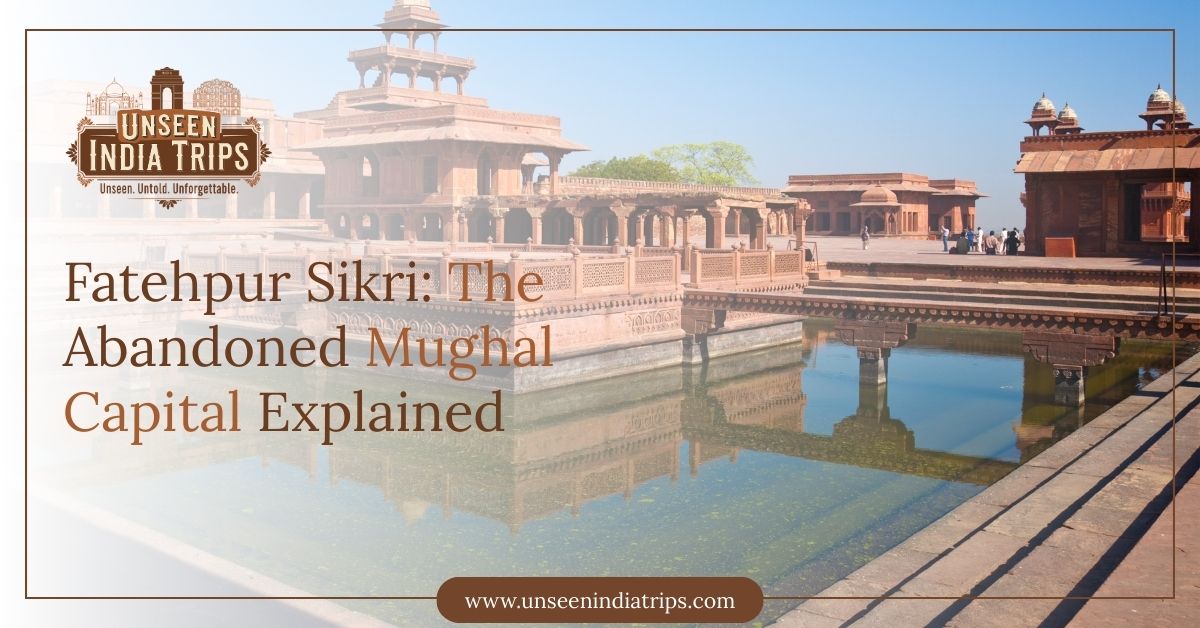
Fatehpur Sikri is one of India’s most fascinating historical destinations and a shining example of Mughal architectural brilliance. Located just 40 kilometres from Agra, this UNESCO World Heritage Site was once the proud capital of the Mughal Empire under Emperor Akbar. Despite its short-lived glory, Fatehpur Sikri continues to captivate travelers with its red sandstone monuments, grand courtyards, and intriguing stories of abandonment.
The Vision Behind Fatehpur Sikri
In the late 16th century, Emperor Akbar decided to build a new capital city to honour the Sufi saint Sheikh Salim Chishti, whose blessings were believed to have helped Akbar gain an heir. Fatehpur Sikri was planned as a symbol of Akbar’s power, religious tolerance, and artistic vision. The city was constructed with remarkable planning, blending Persian, Islamic, and Indian architectural styles.
Architectural Highlights of Fatehpur Sikri
Fatehpur Sikri is a treasure trove for history and architecture lovers. Some of the most iconic structures include:
- Buland Darwaza: One of the tallest gateways in the world, built to commemorate Akbar’s victory over Gujarat.
- Jama Masjid: A grand mosque that reflects the spiritual importance of the city.
- Diwan-i-Khas: Famous for its central pillar, where Akbar held discussions with scholars of different religions.
- Panch Mahal: A five-story palace designed for leisure and ventilation, showcasing Mughal ingenuity.
- Tomb of Sheikh Salim Chishti: A white marble shrine revered by devotees even today.
Each monument tells a story of ambition, faith, and artistic excellence.
Why Was Fatehpur Sikri Abandoned?
Despite its magnificence, Fatehpur Sikri served as the Mughal capital for barely 14 years. The primary reason for abandonment is believed to be water scarcity. Other factors include strategic challenges and Akbar’s shifting political priorities. Eventually, the capital was moved to Lahore and later back to Agra, leaving Fatehpur Sikri frozen in time.
Best Time to Visit Fatehpur Sikri
The ideal time to explore Fatehpur Sikri is between October and March, when the weather is pleasant. Summers can be extremely hot, making sightseeing uncomfortable. Early morning visits are recommended to avoid crowds and fully appreciate the architectural details.
How to Reach Fatehpur Sikri
Fatehpur Sikri is easily accessible from Agra and Delhi. Many travellers include it as part of a Same Day Agra Tour By Train, which allows them to visit the Taj Mahal, Agra Fort, and Fatehpur Sikri in one well-planned itinerary. Trains like the Gatimaan Express make same-day travel fast and convenient.
Why Fatehpur Sikri Should Be on Your Itinerary
Visiting Fatehpur Sikri offers a deeper understanding of Mughal history beyond the Taj Mahal. It provides insight into Akbar’s vision of governance, culture, and harmony. For travellers interested in history, photography, and cultural exploration, Fatehpur Sikri is an unmissable destination near Agra.