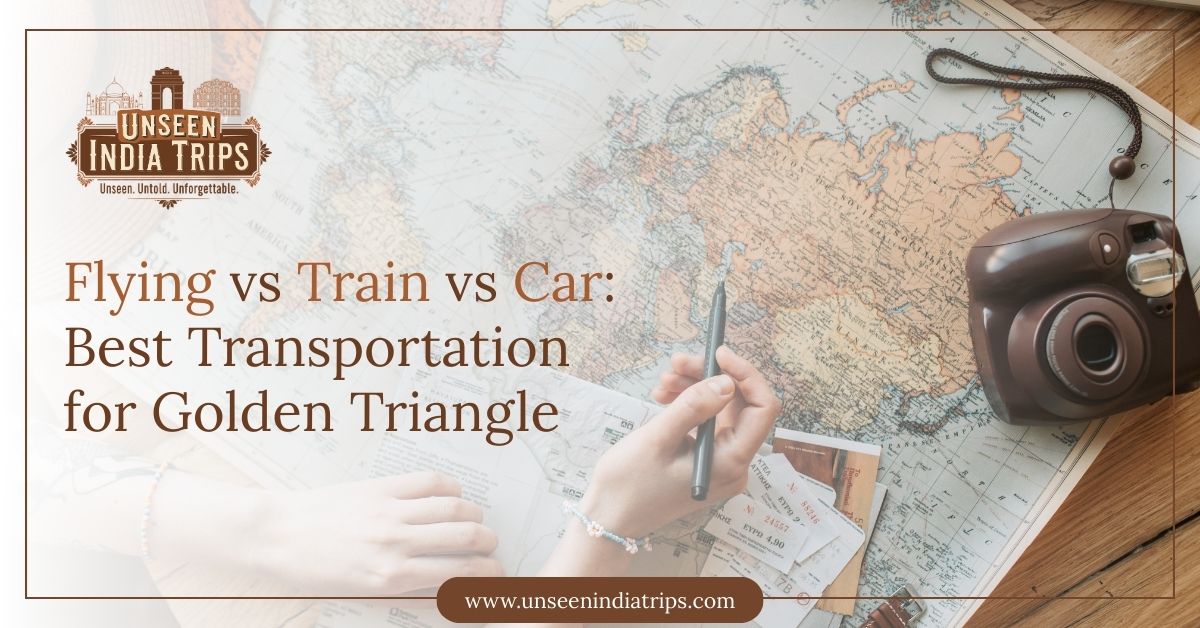
Choosing the right transportation method for exploring India’s Golden Triangle—Delhi, Agra, and Jaipur—significantly impacts your travel experience, budget, and time management. Each option offers distinct advantages and challenges that suit different traveler preferences, schedules, and priorities. Understanding these differences helps you select the transportation strategy that aligns with your travel style, whether you’re seeking maximum efficiency, authentic cultural immersion, or comfortable convenience through golden triangle tour packages.
Flying: Speed at a Premium
The Reality of Domestic Flights
Flying between Golden Triangle cities seems logical given their distances, but practical realities complicate this choice. While Delhi, Agra, and Jaipur all have airports, flight availability and routing present challenges that make flying less practical than initially appears.
Delhi’s Indira Gandhi International Airport serves as a major hub with excellent domestic connections. Jaipur International Airport receives multiple daily flights from Delhi, with journey times around 40-50 minutes. However, Agra’s Kheria Airport handles limited commercial flights, primarily operated by select airlines with irregular schedules. Most travelers find no viable Agra flights during their visit dates, immediately eliminating flying as a complete Golden Triangle solution.
Time Analysis
While flight time between Delhi and Jaipur is under an hour, total travel time tells a different story. Factor in:
- Travel to Delhi airport (1-2 hours, depending on starting location and traffic)
- Arriving 2 hours before the domestic flight
- Flight duration (45-60 minutes)
- Baggage claim (30-45 minutes)
- Travel from Jaipur airport to the city center (30-60 minutes)
Total door-to-door time reaches 5-6 hours—comparable to driving directly between cities. For Delhi-Agra, where no practical flights exist, flying doesn’t enter consideration.
Cost Considerations
Budget airlines like IndiGo and SpiceJet offer competitive Delhi-Jaipur fares when booked well in advance, sometimes matching or barely exceeding train fares. However, last-minute bookings, baggage fees, airport transportation costs, and general price volatility often make flying significantly more expensive than surface transportation.
When Flying Works
Flying makes sense in specific circumstances:
- Very limited time requiring maximum efficiency
- Continuing beyond the Golden Triangle to distant destinations like Goa, Mumbai, or South India, where flying becomes necessary
- Business travelers prioritize time over cost.
- Starting/ending trips at different cities (fly into Delhi, out from Jaipur, for example)
For most tourists completing the classic Golden Triangle circuit, flying’s limited advantages rarely justify its complications and costs.
Train Travel: The Authentic Experience
Infrastructure and Services
Indian Railways’ extensive network provides multiple daily services connecting all three Golden Triangle cities. Trains range from basic passenger services to premium air-conditioned expresses with comfortable seating and meal service.
Key routes include:
- Delhi-Agra: Multiple options, including the high-speed Gatimaan Express (100 minutes) and Shatabdi Express (2 hours)
- Delhi-Jaipur: Shatabdi Express and numerous superfast trains (4-5 hours)
- Agra-Jaipur: Limited direct services, often requiring overnight trains or routing through Delhi
Time and Efficiency
Train travel offers predictability absent in road travel. While occasional delays occur, premium trains like Shatabdi and Gatimaan maintain reasonable punctuality. The Delhi-Agra Gatimaan Express, India’s fastest train, completes the journey in 100 minutes—faster than driving—making same-day Agra trips from Delhi entirely feasible.
Unlike flights requiring hours of pre-boarding time or car travel requiring constant driver attention, train time can be productive. Work on laptops, read, watch landscapes, or simply relax knowing you’ll arrive on schedule without navigation stress or traffic concerns.
Cost Analysis
Train travel provides excellent value. AC Chair Car tickets on premium trains like Shatabdi cost $15-25 for Delhi-Jaipur, with meals included. Even AC First Class overnight tickets rarely exceed $50. Budget options like AC 3-Tier sleeper cost under $10 for overnight journeys, though comfort levels decrease accordingly.
For families or groups, train economics remain favorable. Unlike cars, where per-person costs decrease with more passengers, and unlike flights, where group booking offers minimal discounts, train tickets cost the same regardless of group size, keeping budgets predictable.
The Cultural Experience
Train travel offers unmatched cultural immersion. Observe Indian families traveling together, see rural landscapes between cities, watch vendors selling chai and snacks at stations, and interact with fellow passengers curious about foreign visitors. This authentic experience creates memories beyond just reaching destinations.
Railway stations themselves provide fascinating glimpses into Indian life—the chaos, the organization within apparent disorder, the diversity of travelers from various social classes and regions. For travelers seeking to understand India rather than simply visit monuments, train travel offers invaluable insights.
Challenges
Train travel isn’t without drawbacks. Booking requires navigating the IRCTC website, which frustrates many international travelers with its interface and payment processing. Popular trains fill quickly, requiring advance booking—often impossible for spontaneous travel plans.
Stations can be overwhelming—crowded, noisy, and confusing for first-timers. Finding the correct platforms, locating coaches, and managing luggage amid crowds requires patience. Hygiene standards, while improving, don’t match Western expectations in many cases.
Car Travel: Flexibility and Comfort
Private Car Advantages
Traveling by private car with a driver, the most popular option for international tourists, offers maximum flexibility and comfort. Golden triangle tour packages typically include air-conditioned vehicles (Toyota Innova, Tempo Traveller, or luxury sedans) with English-speaking drivers familiar with routes and tourist needs.
This flexibility allows:
- Departing on your schedule, not train timetables
- Stopping at roadside attractions, photo opportunities, or restaurants as desired
- Storing luggage securely in your vehicle rather than carrying it through stations
- Direct hotel-to-hotel transportation without navigating public transit
- Adjusting daily plans without rebooking tickets
- Privacy and personal space throughout the journey
Time Considerations
Driving times vary significantly based on routes, traffic, and stops:
- Delhi-Agra: 3-4 hours via Yamuna Expressway (200 km)
- Agra-Jaipur: 4-5 hours via NH21 (240 km)
- Jaipur-Delhi: 5-6 hours via NH48 (280 km)
The Yamuna Expressway connecting Delhi and Agra is India’s first six-lane controlled-access expressway, offering smooth, fast driving conditions dramatically better than typical Indian highways. The Delhi-Jaipur and Agra-Jaipur routes use regular national highways with variable conditions—sections are excellent, others deteriorate with heavy truck traffic, construction, or poor maintenance.
Traffic in and around cities adds unpredictable time. Delhi’s notorious congestion can add 1-2 hours to journeys depending on departure times and routes through the city. Starting early morning or traveling mid-day when traffic is lighter minimizes delays.
Cost Structure
Private car costs depend on vehicle type, duration, and included services. Basic Toyota Innova hire typically costs $40-70 per day, including driver, fuel, tolls, and parking. Luxury vehicles run $100-150 daily. Multi-day Golden Triangle tours see per-day costs decrease with longer commitments.
For solo travelers or couples, cars cost more per person than trains. However, groups of 4-6 find cars economical when dividing costs, often comparable to or cheaper than AC train tickets, while offering greater comfort and flexibility.
Many packages quote “per vehicle” rather than “per person,” making it essential to clarify whether rates are individual or group. Always confirm what’s included—fuel, tolls, parking, driver accommodation—to avoid surprise charges.
Comfort and Amenities
Modern vehicles used for tourist services typically feature:
- Reliable air conditioning (crucial in hot months)
- Comfortable seating with adequate legroom
- Music systems (Bluetooth connectivity increasingly common)
- Charging ports for devices
- Adequate luggage space
Drivers often speak functional English and possess smartphone navigation tools. Many serve informal guide roles, offering information about areas you’re passing through, though they’re not substitutes for professional guides at monuments.
Route Considerations
The Agra-Jaipur route allows incorporating Fatehpur Sikri, the abandoned Mughal capital, as a meaningful stop, breaking the journey. This UNESCO World Heritage Site lies conveniently between the cities, and visiting it by car is far simpler than attempting train connections.
Similarly, optional stops at roadside dhabas (local restaurants) offer authentic food experiences impossible when flying or taking express trains. These informal eateries serve delicious North Indian cuisine at very affordable prices, providing cultural experiences alongside meals.
Hybrid Approaches: Combining Methods
Many travelers optimize their Golden Triangle experience by mixing transportation modes based on specific legs:
Train to Agra, Car for the Remainder
Taking the Gatimaan Express or Shatabdi to Agra for same-day visits works brilliantly—fast, economical, and hassle-free. From Agra, hire a car for the journey to Jaipur via Fatehpur Sikri, then either drive back to Delhi or take a train from Jaipur. This combines train efficiency with car flexibility where it matters most.
Car Throughout with Train Experience
Some golden triangle tour packages primarily use private cars but include one train journey (typically the Gatimaan Express) to provide the experience without depending entirely on rail schedules. This offers cultural exposure to train travel without the commitment or booking complexities of a full rail-based tour.
Strategic Flight Usage
Travelers extending beyond the Golden Triangle might fly from Jaipur to southern destinations like Goa or Kerala, using surface transportation within the Golden Triangle but flying for longer distances where time savings justify costs.
Making Your Decision: Key Factors
Time Available
Limited time (3-4 days) favors the flexibility of car travel. Week-long or longer trips can incorporate train journeys without feeling rushed. Flying rarely offers sufficient time savings to justify its complications for Golden Triangle-only itineraries.
Budget Constraints
Budget travelers benefit from trains’ low costs and authentic experiences. Mid-range budgets find that cars offer the best value when costs are shared. Luxury travelers prioritize private cars for comfort and convenience regardless of cost differences.
Travel Style Preferences
Cultural immersion seekers should incorporate train travel for authentic experiences. Comfort-focused travelers prefer private cars’ controlled environments. Efficiency-maximizers might fly specific legs if time is absolutely critical, though this is rarely necessary for the Golden Triangle specifically.
Group Dynamics
Solo travelers and couples find trains more economical. Families and groups of 4-6 discover that private cars become cost-competitive while offering vastly superior convenience. Larger groups requiring Tempo Travellers or minibuses find per-person costs very attractive.
Physical Considerations
Elderly travelers, those with mobility issues, or families with young children often find private cars essential despite higher costs. The door-to-door service, climate control, and ability to stop as needed outweigh any budgetary concerns when physical comfort and accessibility are priorities.
The “best” Golden Triangle transportation method doesn’t exist universally—it depends entirely on your specific circumstances, priorities, and preferences. Understanding each option’s realities rather than assumptions allows informed decisions, creating the experience you seek, whether that’s efficient monument-hopping, cultural immersion, or comfortable exploration at your own pace.