
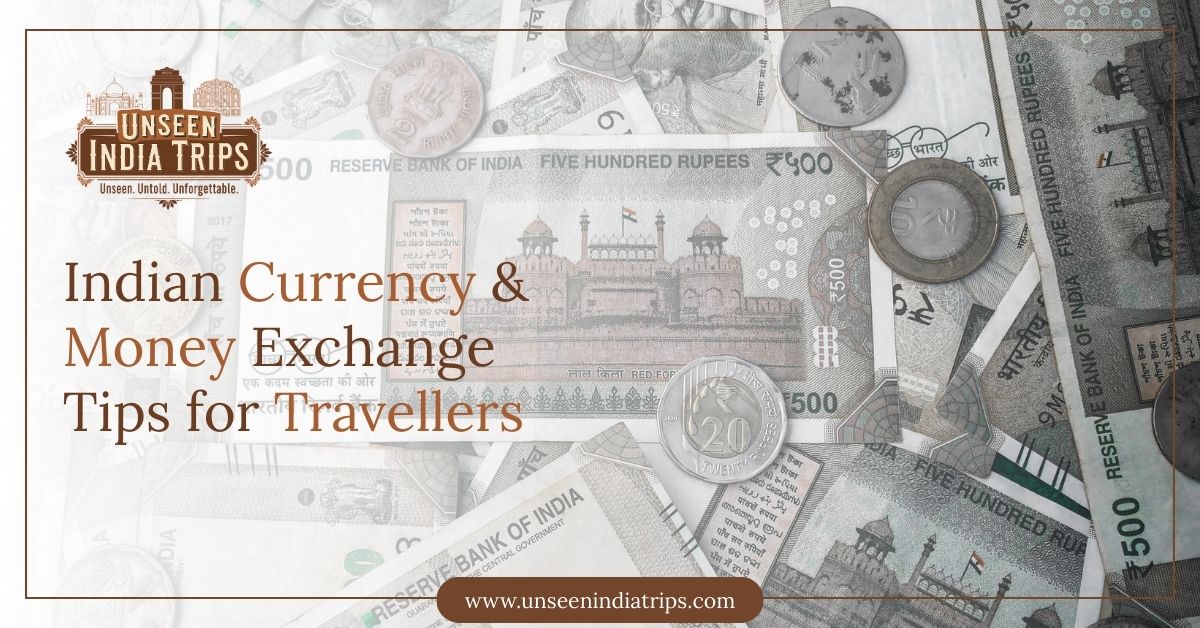
Understanding India’s currency system and knowing how to manage money efficiently can significantly impact your travel experience. From navigating exchange rates to avoiding common scams, being financially prepared ensures smooth transactions throughout your journey. This comprehensive guide covers everything international travelers need to know about Indian currency, exchange options, and smart money management strategies for exploring this diverse and vibrant country.
Understanding Indian Currency
The Indian Rupee (₹ or INR) serves as India’s official currency, issued and regulated by the Reserve Bank of India. The rupee divides into 100 paise, though coins smaller than ₹1 are rarely used in practice. Currency denominations include:
Banknotes: ₹10, ₹20, ₹50, ₹100, ₹200, ₹500, and ₹2,000 Coins: ₹1, ₹2, ₹5, ₹10, and ₹20
The ₹2,000 note, introduced in 2016, is being phased out and may not be widely accepted. The most commonly used notes are ₹100, ₹500, and ₹50 denominations. India updated its currency design in recent years, introducing new security features, so you’ll encounter both older and newer versions of the same denomination—all remain legal tender.
Always inspect notes carefully before accepting them. Damaged, excessively torn, or heavily soiled notes may be rejected by merchants, though banks will exchange them. Keep notes flat and in good condition to avoid acceptance issues.
Current Exchange Rate Dynamics
The Indian Rupee’s value fluctuates against major international currencies based on economic conditions, government policies, and global market forces. As of recent trends:
- 1 USD ≈ ₹83-84
- 1 EUR ≈ ₹90-92
- 1 GBP ≈ ₹105-107
- 1 AUD ≈ ₹55-57
These rates change daily, so check current rates before traveling. Websites like XE.com, OANDA, or Google Finance provide real-time exchange rates. Remember that the rate you receive when exchanging money will differ from the interbank rate quoted online, as exchangers add margins to profit.
Understanding the approximate rate helps you identify fair exchange offers and recognize when you’re being significantly overcharged. Calculate rough conversions in your head—for example, if USD to INR is around 83, then $100 equals approximately ₹8,300.
Best Places to Exchange Currency
Airport Exchange Counters
Advantages:
- Immediate access upon arrival
- Convenient before entering the city
- Legitimate, regulated businesses
- English-speaking staff
Disadvantages:
- Typically 3-5% worse rates than city options
- Higher commission fees
- Limited negotiation possibility
Recommendation: Exchange only small amounts (₹2,000-5,000 or $25-60) at airports for immediate needs like transportation, water, and snacks. Complete major exchanges at better-rated city locations.
Authorized Money Changers
Licensed currency exchange businesses in cities offer better rates than airports while remaining legitimate and safe. Look for:
- Proper licenses displayed prominently
- Located in reputable shopping areas or near major hotels
- Clear rate boards showing buying and selling prices
- Professional appearance and security measures
Major chains like Thomas Cook, Cox & Kings, and UAE Exchange maintain locations throughout tourist areas with competitive rates. Independent exchangers in markets like Delhi’s Connaught Place or Mumbai’s Colaba often offer slightly better rates but require more caution regarding legitimacy.
Always count money carefully before leaving the counter, and don’t accept transactions in dimly lit or isolated locations regardless of promised rates.
Banks
Advantages:
- Most secure option
- Transparent, regulated transactions
- Official receipts for records
- Best option for large amounts
Disadvantages:
- Time-consuming processes
- Longer queues and banking hours (typically 10 AM – 4 PM weekdays)
- Rates may not be most competitive
- Requires passport presentation
Major banks like State Bank of India, HDFC Bank, ICICI Bank, and Axis Bank handle foreign exchange. Some branches specialize in forex services with dedicated counters, while others require longer waits.
Hotels
High-end hotels offer currency exchange services for guests, though rates are typically 5-8% worse than market rates. This convenience option works when you need small amounts urgently but isn’t recommended for significant exchanges.
ATMs
ATMs throughout India accept international cards (Visa, Mastercard, Maestro, Cirrus), offering competitive exchange rates close to interbank rates. This method often provides the best effective rate despite fees.
Advantages:
- Available 24/7
- Competitive exchange rates
- Convenient locations throughout cities
- Secure, no cash carrying from home needed
Disadvantages:
- Daily withdrawal limits (₹10,000-40,000 depending on bank and card)
- ATM fees from Indian banks (₹150-250 per transaction)
- Your home bank may charge international transaction fees
- Occasional machine failures or cash shortages
Best Practices:
- Withdraw larger amounts to minimize per-transaction fees
- Use ATMs inside bank branches or secure locations rather than standalone street machines
- Cover the keypad when entering PINs
- Immediately count cash before leaving the ATM area
- Keep transaction receipts for record-keeping
Credit and Debit Cards
Major establishments in cities—hotels, restaurants, shopping malls, and tourist attractions—accept credit cards. However, cash remains essential throughout India, particularly in smaller towns, local markets, street food stalls, and rural areas.
Tips for Card Usage:
- Notify your bank of India travel dates to prevent fraud blocks
- Carry cards with chip-and-PIN technology
- Be aware of dynamic currency conversion (DCC) offers—always choose to pay in INR rather than your home currency for better rates
- Keep cards secure and never lose sight of them during transactions
- Verify amounts before entering PINs
Digital Payment Options
India has rapidly embraced digital payments, with several popular platforms widely accepted:
UPI (Unified Payments Interface): The dominant payment system in India, used through apps like Google Pay, PhonePe, and Paytm. Unfortunately, international tourists cannot easily access UPI without Indian bank accounts and phone numbers.
International Digital Wallets: PayPal is accepted by some online merchants but rarely for in-person transactions. Apple Pay and Google Pay work with international cards at NFC-enabled terminals, though availability is limited.
QR Code Payments: Many merchants display QR codes for payment. Without UPI access, these remain unavailable to most tourists.
Despite India’s digital payment revolution, international travelers should rely primarily on cash and international credit/debit cards rather than expecting to use digital wallets seamlessly.
How Much Cash to Carry
The amount varies based on your travel style, destinations, and duration:
Budget Travelers: ₹2,000-3,000 ($25-35) daily for basic accommodations, local food, public transport
Mid-Range Travelers: ₹5,000-8,000 ($60-95) daily for comfortable hotels, restaurants, hired transport, entrance fees
Luxury Travelers: ₹15,000+ ($180+) daily for premium accommodations, fine dining, private transportation
These estimates assume card payments for major expenses (hotels, organized tours) and cash for everything else. When booking comprehensive India tour packages, many major expenses are prepaid, reducing daily cash needs significantly.
Always carry more cash than you anticipate needing. ATMs occasionally malfunction, banks have holidays, and unexpected expenses arise. Keep ₹500-1,000 in small notes (₹10, ₹20, ₹50) for taxis, tips, small purchases, and situations where vendors cannot provide change.
Avoiding Common Scams and Issues
Fake Currency: While rare, counterfeit notes exist. Accept currency only from legitimate sources—banks, authorized exchangers, and reputable ATMs. Check security features: watermarks, security threads, and color-changing ink.
Poor Exchange Rates Disguised: Some exchangers advertise “no commission” but build profits into poor exchange rates. Always compare the offered rate against online interbank rates. A margin of 2-4% is reasonable; anything above 6-8% is excessive.
Shortchanging: Count all money carefully immediately at exchange counters. Some dishonest operators use distraction techniques while counting to short-change customers.
Commission Confusion: Understand whether quoted rates are final or if additional commissions apply. Ask explicitly: “Is this the final rate I receive, or are there additional charges?”
ATM Skimming: Use ATMs in secure, well-lit locations, preferably inside bank branches. Inspect card slots for unusual attachments before inserting cards.
Dynamic Currency Conversion: When paying by card, merchants may offer to charge your home currency instead of INR. This “convenience” comes with terrible exchange rates. Always choose to pay in INR.
Practical Money Management Tips
Diversify Your Money: Don’t rely on a single payment method. Carry:
- Cash in INR (primary payment method)
- At least two different ATM/debit cards
- Credit card for emergencies and major purchases
- Small amount of USD or EUR as emergency backup
Secure Storage: Distribute money across multiple locations—wallet, money belt, locked luggage, hotel safe. Never carry all funds in one place.
Small Denominations Matter: Always keep ₹500-1,000 in notes smaller than ₹50. Taxi drivers, street vendors, and small shops frequently claim they cannot provide change for ₹500 or ₹2,000 notes, sometimes legitimately, sometimes hoping you’ll say “keep the change.”
Document Everything: Keep exchange receipts. They’re required for converting unused rupees back to foreign currency when leaving India. Photograph or note your credit card numbers and emergency contact numbers separately from the cards themselves.
Tipping Customs: Tipping isn’t mandatory but appreciated:
- Restaurants: 10% in mid-range to upscale establishments
- Hotel porters: ₹50-100 per bag
- Drivers: ₹200-500 daily for private drivers
- Tour guides: ₹300-500 daily
Bargaining: Bargaining is expected in markets, with taxis lacking meters, and for unregulated services. Start at 50-60% of the initial asking price and negotiate upward. Fixed-price stores, restaurants, and regulated services don’t bargain.
Regional Considerations
Major Cities (Delhi, Mumbai, Bangalore, Chennai): ATMs everywhere, cards widely accepted, numerous authorized exchangers, sophisticated payment infrastructure.
Tourist Towns (Agra, Jaipur, Udaipur, Varanasi): Good ATM access, many card-accepting establishments, authorized exchangers near major attractions. Cash still essential for smaller merchants.
Rural Areas and Small Towns: Limited ATM availability, cash-only transactions standard, card acceptance rare. Plan ahead by carrying sufficient cash before leaving cities.
Remote Regions (Ladakh, Spiti, Northeastern States): Very limited banking infrastructure. Carry ample cash and don’t rely on ATM access. Some areas may have no connectivity for card transactions even if machines exist.
Departing India: Currency Reconversion
Indian law restricts taking rupees out of India beyond small amounts (₹25,000 for travelers to most countries). Before departure:
- Spend remaining rupees on airport purchases, meals, or souvenirs
- Convert unused rupees back to foreign currency at airport exchangers (requires original exchange receipts and passport)
- Consider keeping small amounts (₹1,000-2,000) as souvenirs or for potential future visits
Most travelers find spending remaining rupees at airports more satisfying than reconversion, which typically offers poor rates.
Financial Planning for Your Trip
When organizing India tour packages, clarify what expenses are included (accommodations, transportation, entrance fees, some meals) versus what requires separate payment. This helps estimate cash needs accurately.
Create a daily budget accounting for:
- Meals not included in tour packages
- Bottled water and snacks
- Entrance fees for non-included attractions
- Shopping and souvenirs
- Tips for drivers, guides, and service staff
- Emergency buffer (medical, unexpected opportunities)
Track spending during initial days to calibrate your budget. India can be surprisingly affordable, but costs accumulate quickly when purchasing bottled water constantly, taking numerous auto-rickshaw rides, and shopping regularly.
Conclusion
Successfully managing money in India requires understanding currency denominations, choosing appropriate exchange methods, maintaining security awareness, and adapting to the country’s cash-oriented culture despite its digital payment revolution. Exchange small amounts at airports for immediate needs, use ATMs for competitive rates on larger withdrawals, keep diverse payment methods accessible, and maintain adequate cash reserves especially when venturing beyond major cities.
The key is balancing convenience, security, and cost-effectiveness. While international travelers cannot access India’s impressive UPI ecosystem, the combination of ATMs offering good rates, widespread cash acceptance, and growing card infrastructure in tourist areas makes financial management straightforward with proper planning. By following these guidelines, you’ll navigate India’s financial landscape confidently, focusing energy on experiencing the country’s incredible culture, history, and hospitality rather than worrying about money matters.