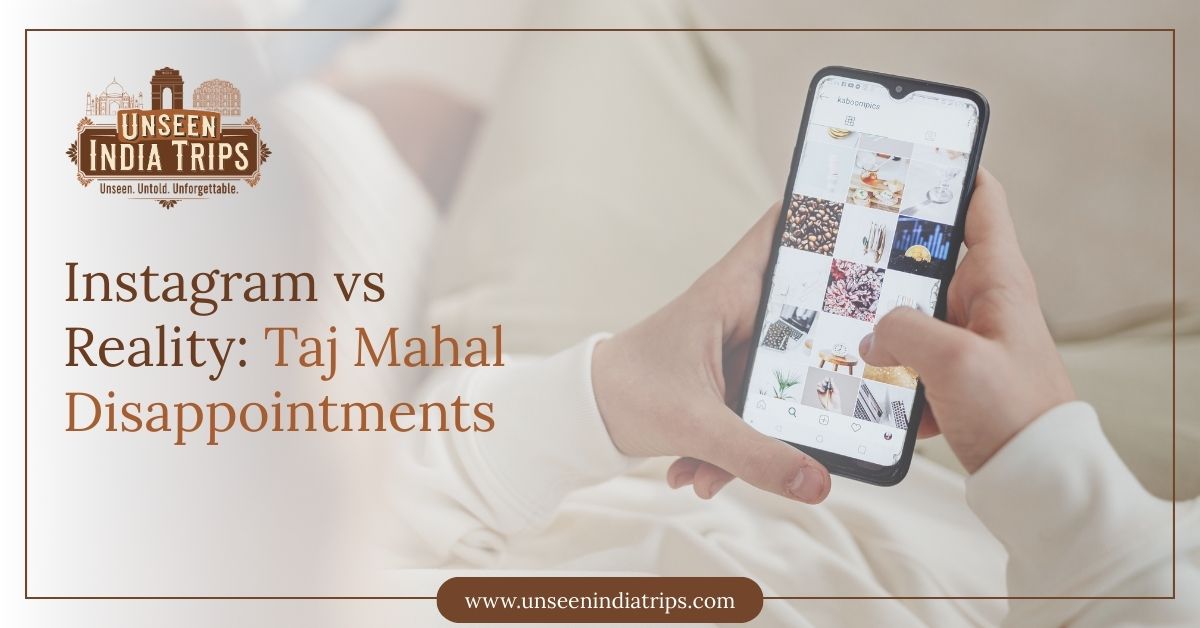
Social media presents the Taj Mahal through carefully curated lenses—pristine white marble glowing against impossibly blue skies, solitary monuments without a soul in sight, perfectly symmetrical reflections in crystal-clear pools. These images create expectations that clash dramatically with reality when travelers arrive to find crowds, pollution, touts, and a monument that, while beautiful, exists within the messy context of modern India rather than timeless isolation. Understanding the gap between Instagram fantasy and on-ground reality helps set appropriate expectations, preventing disappointment and allowing appreciation of what the Taj Mahal actually offers when experienced through a Taj Mahal tour by car rather than through filtered photographs.
The Crowd Reality
Perhaps the biggest disconnect between Instagram and reality involves crowds. Those iconic empty-monument shots require arriving at specific times (very early sunrise or late afternoon), extraordinary patience waiting for crowd-free moments, or creative photography angles eliminating people from frames. The reality? The Taj Mahal attracts 7-8 million visitors annually—approximately 20,000-25,000 daily during peak season (October-March).
You won’t experience solitary contemplation before an empty monument. You’ll navigate crowds at entry gates, jostle for photograph positions, share viewing platforms with dozens of others, and photobomb strangers’ pictures while they photobomb yours. Popular photography spots—the iconic bench in the gardens, the perfect reflection pool shot, the view through the entry gate arch—require queuing and accepting that your photos will include other tourists unless you wait indefinitely for rare crowd-free moments.
Weekends and Indian holidays intensify crowds further as domestic tourists visit en masse. If your visit coincides with major Indian holidays (Diwali, Holi, Independence Day), expect maximum crowds that can make the experience feel more like a theme park than a serene monument.
However, strategic timing helps. Sunrise visits (gates open 30 minutes before sunrise) offer a relatively peaceful first hour before tour groups arrive around 8-9 AM. Late afternoon (after 3 PM) sees fewer visitors as day-trippers depart. These windows won’t eliminate crowds entirely, but reduce them to manageable levels compared to midday madness.
The Pollution and Haze Problem
Instagram’s impossibly blue skies and crisp visibility rarely match reality. Agra, like much of North India, suffers significant air pollution from vehicles, industries, construction, and seasonal crop burning in surrounding regions. This pollution creates persistent haze that mutes colors, reduces visibility, and yellows the Taj Mahal’s marble.
Winter months (November-February) see the worst air quality as temperature inversions trap pollution near the ground. The monument often appears through a grayish haze rather than in crystal-clear conditions. Brilliant blue-sky days occur occasionally, but more commonly, the sky presents washed-out, hazy appearances that photographs can’t fully correct.
Summer heat creates its own visibility challenges—dust and heat shimmer affect distant views. Monsoon humidity, while improving air quality somewhat, brings different atmospheric conditions that affect photography.
The pollution also affects the marble itself. Despite regular cleaning, the Taj Mahal shows yellowing from decades of pollution exposure. Conservation efforts continue, but the pristine white marble of Instagram images often represents photo editing rather than the current reality.
The Surrounding Context
Instagram images carefully exclude context—the chaotic Agra cityscape visible from certain angles, the reduced Yamuna River behind the monument (now often nearly dry or polluted), the security infrastructure (fences, checkpoints, guards), and the general urban setting. The Taj Mahal exists within a busy Indian city, not in isolated perfection.
The approach involves security checkpoints, bag inspections, and queues for tickets and entry. The monument sits behind walls and gates—you won’t simply walk up to it across open spaces. The gardens, while beautiful, show wear from millions of visitors and may not match the perfectly manicured lawns of promotional images.
Vendors, touts, and unofficial guides cluster around entry areas, creating harassment that Instagram never captures. Expect persistent selling attempts, photography offers (with subsequent payment demands), and a general commercial atmosphere that contrasts sharply with the spiritual or romantic setting social media suggests.
The Photography Challenge
Creating Instagram-worthy shots at the Taj Mahal requires significantly more effort than casual visitors expect. Professional or serious amateur photographers achieve stunning images, but this demands:
Early or Late Hours: Golden hour lighting (sunrise/sunset) creates the warm, glowing images that look spectacular. Midday harsh sunlight, while showing the monument’s brightness, creates washed-out, less visually appealing photos.
Patience: Waiting for crowd-free moments means standing in position for extended periods, watching for brief windows when people move out of frame. This patience, combined with rapid shooting when opportunities arise, captures cleaner images.
Equipment: Quality cameras with proper lenses photograph better than smartphones, particularly in challenging lighting. Smartphone shots can be good, but rarely match the quality of images flooding social media, which often come from professional equipment.
Editing Skills: Instagram’s perfect images invariably involve editing—color correction, contrast adjustment, sky replacement, people removal using apps, and various enhancements. Raw, unedited photos rarely look as impressive as curated social media posts.
Composition Knowledge: Understanding photography composition—leading lines, rule of thirds, foreground interest—separates amateur snapshots from stunning images. Most visitors lack this expertise, resulting in photos that, while nice, don’t match professional Instagram content.
This doesn’t mean you won’t get good photos—you will. But tempering expectations about casually capturing images matching heavily curated social media content prevents frustration.
The Scale Perception
Photographs flatten three-dimensional space, affecting scale perception. The Taj Mahal looks one size in images but reveals far more impressive dimensions in person. This works both ways—some expect it to appear larger from certain angles, while others find its actual size more overwhelming than photographs suggest.
The gardens also present a scale that photographs don’t convey. The walk from the entry gate to the monument measures approximately 300 meters—longer than the images suggest. This distance, while beautiful, challenges those with mobility limitations or discomfort in the heat.
The Emotional Experience Gap
Instagram suggests transcendent, emotional experiences before the monument—tears of joy, spiritual awakening, romantic perfection. Reality? Most visitors find it beautiful and impressive, but experience more practical concerns—managing crowds, dealing with heat, coordinating group photos, watching possessions, and navigating logistics.
Some travelers genuinely experience profound emotional responses to the Taj Mahal’s beauty. Others feel appreciation without overwhelming emotion. Neither response is wrong, but social media creates pressure to feel specific ways that may not match individual reactions.
The experience quality depends heavily on circumstances. Visiting during a Taj Mahal tour by car allows flexibility in timing and pacing that enhances the experience quality. Rushed visits during peak crowds naturally diminish emotional resonance compared to leisurely, well-timed visits.
The Insider Areas
Instagram focuses on the exterior—gardens, reflecting pools, and the main facade. Many visitors don’t realize that the interior chamber containing the actual tombs also deserves visits. This domed chamber features spectacular marble inlay work, carved screens, and unique acoustics, creating haunting echoes.
However, the interior often feels crowded, dark, and somewhat claustrophobic. The most ornate decorative work requires close examination, but crowds and guards preventing touching make detailed observation challenging. Instagram rarely shows interior reality—packed chambers with people shuffling through, limited time for contemplation, and general bustle that contrasts with serene exterior photographs.
Managing Expectations Positively
Understanding Instagram versus reality doesn’t mean the Taj Mahal disappoints—quite the opposite. The monument genuinely ranks among humanity’s greatest architectural achievements. Its beauty surpasses photographs despite pollution, crowds, and context. The key lies in realistic expectations:
What to Expect:
- Crowds, especially mid-morning through afternoon
- Some haze or pollution is affecting visibility and photography
- Commercial atmosphere around entry areas
- Security procedures and infrastructure
- Walking distance and physical effort
- Variable weather conditions affect comfort
What You’ll Actually Experience:
- A genuinely magnificent monument that photographs don’t fully capture
- Intricate artistic details invisible in photos—inlay work, calligraphy, architectural proportions
- The changing quality of light across the marble surface throughout the day
- Historical and cultural significance that transcends physical beauty
- Pride in seeing one of the world’s most iconic monuments in person
- Unique experiences, crowds, or challenges create—the human element is absent from sterile Instagram perfection
Making Your Visit Instagram-Worthy
If creating social media content matters to you, strategies improve results:
Timing: Arrive at sunrise for best light and fewer crowds. This requires early wake-up (4-5 AM) but dramatically improves photography opportunities and overall experience.
Patience: Allocate extra time specifically for photography. Rushing through won’t yield quality images.
Unique Angles: Move beyond the standard shots everyone takes. Explore different garden vantage points, architectural details, reflections in unexpected places, or creative compositions using foreground elements.
People in Context: Instead of fighting crowds, embrace them. Photos showing the monument’s scale with people, cultural diversity of visitors, or human interactions with the monument tell more interesting stories than empty monument shots.
Tell Reality: Authentic posts acknowledging crowds, challenges, and imperfect conditions resonate more than pretending your experience matched Instagram fantasy. Reality-based content creates more meaningful connections than perfectly curated fiction.
The Ultimate Reality
The Taj Mahal remains absolutely worth visiting despite gaps between social media fantasy and on-ground reality. Yes, crowds exist. Yes, pollution affects visibility. Yes, the setting includes modern India’s complexity. But the monument itself—its proportions, artistry, history, and sheer beauty—transcends these challenges.
The disconnect stems not from the monument’s failings but from social media’s inherent dishonesty. Curated feeds show perfect moments extracted from hours of imperfect reality. Understanding this allows appreciation of your experience rather than disappointment that it doesn’t match someone else’s heavily edited highlights.
Visit with open eyes and realistic expectations. The Taj Mahal will impress you—perhaps differently than Instagram suggested, but genuinely and memorably. The experience of standing before this architectural masterpiece, understanding its history, appreciating its artistry, and connecting with its story of love and loss creates value that no photograph, filtered or unfiltered, can fully communicate. That’s what makes the journey worthwhile, crowds and all.