
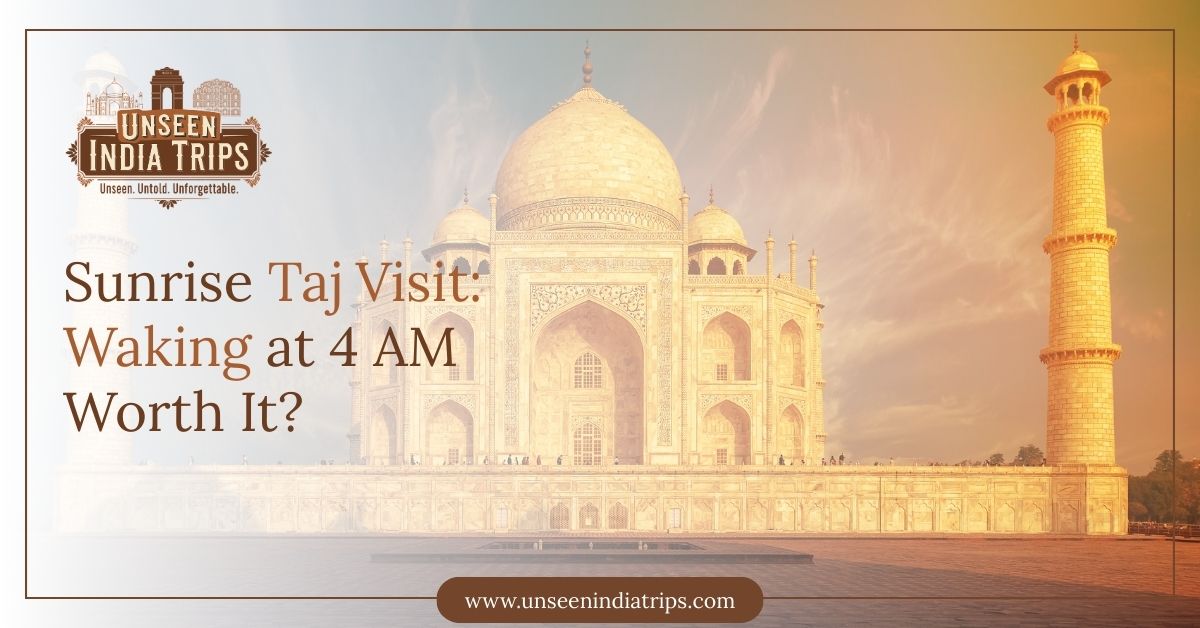
The alarm sounds at 4:00 AM in your Agra hotel room. Outside, darkness still blankets the city. Your bed feels comfortable, and every fiber of your being questions why you’re voluntarily leaving it at this ungodly hour. This internal debate faces every traveler planning a sunrise Taj Mahal visit during their overnight Agra tour. Is the effort truly worthwhile, or is sleeping in and visiting later a more sensible choice? The honest answer: for most travelers, the sunrise visit absolutely justifies the early wake-up, offering experiences and conditions impossible at any other time of day.
The Practical Benefits
Cooler Temperatures
Agra’s climate ranges from uncomfortably warm to brutally hot most of the year. March through October sees daytime temperatures regularly exceeding 35-40°C (95-104°F), with May-June peaks sometimes reaching 45-48°C (113-118°F). These conditions make midday sightseeing physically exhausting and potentially dangerous.
Sunrise temperatures, conversely, typically measure 15-20°C cooler than midday highs. Even during peak summer, early morning offers tolerable conditions around 25-30°C (77-86°F) before heat builds. This comfortable temperature range allows unhurried exploration without heat exhaustion concerns, excessive sweating, soaking clothes, or the oppressive feeling that comes from touring monuments in extreme heat.
For travelers sensitive to heat, elderly visitors, families with young children, or anyone with heat-related health concerns, this temperature advantage alone justifies early rising. The physical comfort dramatically improves the overall experience quality.
Significantly Fewer Crowds
The Taj Mahal opens 30 minutes before official sunrise time (varies seasonally but typically 5:30-6:00 AM). Those arriving at the opening encounter relatively sparse crowds—perhaps a few hundred people rather than the thousands present by mid-morning.
This reduced crowding means:
- No long queues at entry gates or security checkpoints
- Easy access to popular photography spots without waiting
- Ability to view the monument from prime locations without jostling
- More intimate, contemplative atmosphere rather than theme-park chaos
- Fewer photobombs in your pictures
- Quieter environment allowing you to hear birdsong, fountains, and ambient sounds rather than tourist din
By 8-9 AM, tour buses begin arriving en masse. The serene morning atmosphere vanishes as thousands of visitors flood the complex. If you’ve experienced the peaceful sunrise hours, you’ll feel gratitude for the timing rather than disappointment at the crowd chaos that follows.
Superior Photography Conditions
Photographers particularly benefit from sunrise timing. The golden hour—the hour after sunrise—creates warm, soft, directional light that enhances the marble’s beauty and creates interesting shadows highlighting architectural details.
The white marble responds dramatically to changing light. As the sun rises, the monument transitions through a spectacular color sequence—soft pinks and oranges during early sunrise, warm golden tones as the sun clears the horizon, then brilliant white as daylight establishes. This transformation, visible only to sunrise visitors, creates photographic opportunities unavailable at any other time.
The reflecting pool in front of the Taj Mahal also behaves better during early morning. Minimal wind means still water, creating perfect mirror reflections—the iconic symmetrical image that rarely works later when breezes disturb the surface.
Air quality, while still not perfect, typically improves overnight compared to afternoon conditions. Reduced traffic and industrial activity mean less pollution and clearer visibility for distance shots and city views.
The Experiential Magic
Beyond practical advantages, sunrise visits offer qualitative experiences that transcend mere convenience:
Witnessing the Transformation
Arriving before sunrise allows experiencing the monument’s awakening. You’ll stand in darkness or predawn twilight, watching the eastern sky gradually lighten. As light increases, the Taj Mahal emerges from darkness, first as a pale silhouette, then gradually revealing details as illumination grows.
This theatrical reveal creates an emotional impact that arriving at a fully-lit monument cannot match. You’re witnessing a daily miracle—the sun bringing light to one of humanity’s greatest artistic achievements. This temporal dimension adds depth to the experience beyond merely seeing a beautiful building.
Connecting with History
Shah Jahan, who built the Taj Mahal, likely stood in a similar position watching similar sunrises 350+ years ago. Millions of visitors across centuries have witnessed this same daily transformation. Participating in this timeless ritual connects you to history in ways that practical, brightly-lit midday visits don’t facilitate.
The early morning quiet also allows imaginative transportation to earlier eras. Without modern crowds and commercial noise, it’s easier to envision what the monument meant to those who built and first visited it—a memorial to profound love and human mortality rendered in stone and artistic genius.
Meditative Quality
The relative quiet, soft light, and cooler temperatures create a contemplative atmosphere. Rather than rushing through a checklist of photo spots, sunrise visits encourage actually looking, thinking, and feeling. You can sit on garden benches, observe details, and process the experience rather than simply documenting it.
Many travelers report that their most memorable Taj Mahal moments came not from the monument itself but from quiet contemplation during peaceful early morning hours—watching birds fly past the minarets, seeing dew glisten on garden grass, hearing the subtle sounds of the complex awakening.
The Challenges
Honesty requires acknowledging sunrise visit difficulties:
The Wake-Up
Waking at 4:00 AM after arriving late the previous evening (as often happens during overnight Agra tour schedules) means functioning on minimal sleep. Some travelers feel groggy, irritable, or simply exhausted. Coffee helps, but nothing fully compensates for inadequate rest.
If you’re naturally a morning person, this matters less. Night owls, however, suffer significantly. Assess your own sleep patterns and requirements honestly when deciding.
Morning Logistics
Most hotels need advance notice for early breakfasts or packed breakfasts for departing guests. This requires planning the previous evening. Rushing around unprepared at 4 AM creates stress that undermines the morning’s benefits.
Getting ready in darkness, ensuring you have everything needed, and departing efficiently while others sleep requires organization and preparation. Laying out clothes, charging devices, and packing bags the previous evening streamlines morning routines.
Cold Weather (Winter)
November through February brings cold mornings to North India, with temperatures sometimes dropping to 5-10°C (41-50°F). Standing in gardens at this temperature, particularly in the wind, feels unpleasant without warm clothing.
Most travelers don’t pack for cold weather when visiting “hot India,” creating discomfort during cool sunrise hours. Carrying layers—a sweater or light jacket—allows comfort despite limited luggage space.
Security and Entry
Even at sunrise, security procedures remain thorough. Allow 20-30 minutes for entry processing—ticket purchase, bag inspection, queuing through checkpoints. This means arriving at the complex by 5:00-5:15 AM to be through security by opening, requiring hotel departure around 4:30-4:45 AM.
The Afternoon Letdown
After the 4 AM wake-up and morning exertions, afternoon fatigue hits hard. Many sunrise visitors find themselves exhausted by 2-3 PM, struggling through afternoon activities or skipping them entirely for hotel naps.
This is particularly relevant during multi-day tours where each day involves intensive sightseeing. The sunrise visit might mean sacrificing afternoon productivity. Whether this trade-off makes sense depends on your overall itinerary and priorities.
Who Should Definitely Do It
Sure travelers benefit most from sunrise visits:
Photographers: No question—sunrise offers the only acceptable lighting for quality Taj Mahal photography. Serious photographers should accept no alternatives.
Heat-Sensitive Travelers: Anyone uncomfortable in high temperatures, including elderly visitors, those with medical heat intolerance, or families with young children, finds the cooler morning temperatures essential for comfortable touring.
Crowd-Averse Individuals: If crowds cause significant stress or diminish your enjoyment, sunrise timing dramatically improves experience quality by providing a relatively peaceful atmosphere.
Romantic Travelers: Couples, honeymooners, or anniversary celebrants find the romantic, intimate atmosphere of sunrise enhances the monument’s association with eternal love.
Photography-Focused Visitors: Even amateur photographers wanting quality images for lasting memories rather than professional purposes benefit dramatically from sunrise light and fewer people.
Who Can Reasonably Skip It
Extreme Night Owls: If waking at 4 AM causes such distress that you’ll be miserable and unable to appreciate the experience, sleep in. You’ll still see a beautiful monument, just under different conditions.
Travelers on Very Limited Time: If you’re doing a rapid multi-city tour where sleep deprivation accumulates across days, preserving energy by sleeping in and visiting later might make sense for overall trip sustainability.
Those Visiting Multiple Times: If your overnight Agra tour includes sunset and sunrise options, or if you’re staying multiple days, allowing several visits, you can experience different times without feeling pressured to catch the “perfect” single moment.
Making the Decision
Consider these factors:
- Your natural sleep patterns and function level on minimal rest
- Whether you’re traveling alone (easier to motivate yourself) or with others (harder to coordinate group wake-ups)
- Your photography priorities
- Heat tolerance and physical comfort in various temperature conditions
- Crowd sensitivity
- Overall itinerary demands and energy reserves
For most travelers, particularly first-time visitors, the sunrise visit delivers rewards exceeding the sacrifice. The memories of standing in peaceful gardens watching sunlight illuminate the Taj Mahal last far longer than the morning’s discomfort. Years later, you’ll remember the magical sunrise experience, not the 4 AM alarm.
However, if the choice creates significant stress—arguments with travel companions, risk of illness from exhaustion, or such dread that you won’t enjoy the experience—then visiting at another time is perfectly valid. Better a peaceful, enjoyable 10 AM visit than a stressed, miserable sunrise visit you forced yourself to endure.
The Taj Mahal remains beautiful at any hour. Sunrise simply offers the most favorable conditions for experiencing that beauty. Whether those advantages justify the 4 AM wake-up depends entirely on your personal circumstances, priorities, and what you want from your Agra experience.