
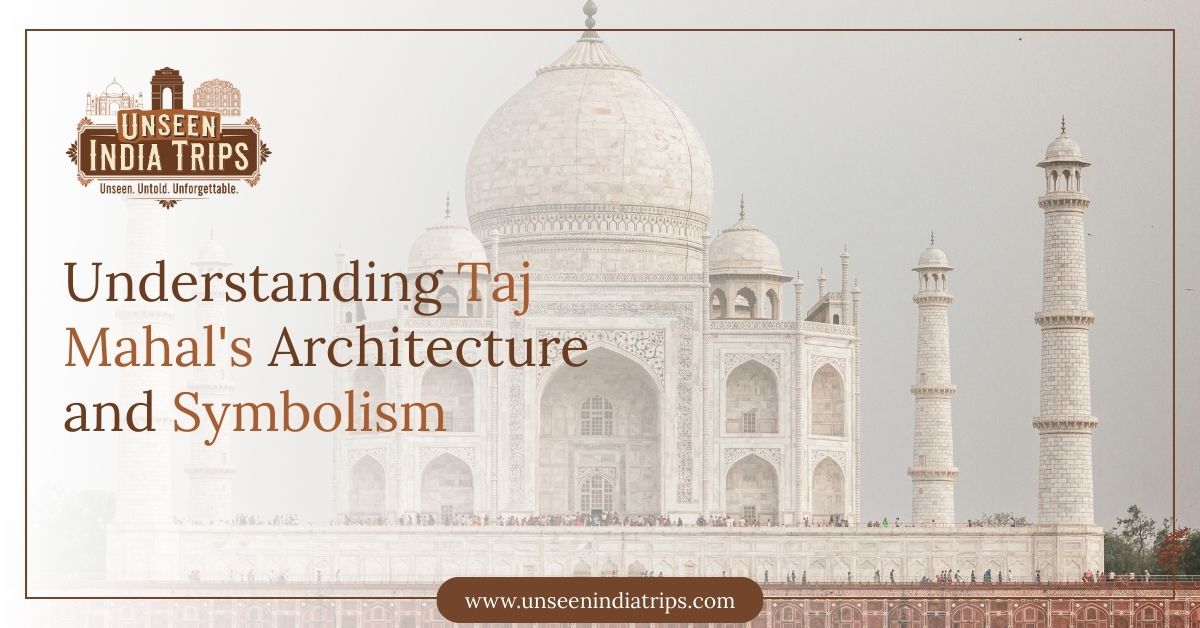
The Taj Mahal transcends mere architectural achievement, becoming a profound meditation on love, death, and paradise rendered in marble and mathematics. Every element—from its proportions to its decorative details—carries layers of meaning that transform Emperor Shah Jahan’s monument to his beloved wife, Mumtaz Mahal, into one of humanity’s most symbolic structures. Understanding the architecture and symbolism enriches visitors’ experience of the Taj Mahal, whether through tour packages or independent travel, revealing how this masterpiece communicates eternal truths through stone, geometry, and light.
Architectural Foundation and Design
Perfect Symmetry: The Taj Mahal achieves absolute bilateral symmetry along its central north-south axis. The main tomb, flanking buildings, garden layout, and even decorative elements mirror perfectly on either side of this axis. This symmetry represents cosmic order, divine perfection, and the balance between earthly and heavenly realms, central to Islamic cosmology.
Interestingly, the actual graves in the underground chamber break this symmetry—Shah Jahan’s tomb sits beside Mumtaz’s rather than centred, as he was buried here after death rather than being part of the original design. Only the decorative cenotaphs on the main floor maintain perfect symmetry.
The Char Bagh Garden: The garden is divided into four quadrants by water channels that represent the four rivers of paradise described in the Quran—water, milk, wine, and honey. Traditional Islamic gardens place the main structure at the centre. Still, the Taj sits at the garden’s far end, creating visual drama as visitors progress through planned perspectives toward the monument.
This placement also reflects the concept of paradise as a garden—the tomb represents the ultimate destination, paradise itself, reached through the earthly garden symbolising the journey of the soul.
The Elevated Platform: The Taj Mahal rises on a square marble platform (takht) measuring 95 meters per side and 7 meters high. This elevation separates the sacred tomb from the earthly garden, emphasizing its spiritual nature. The platform creates visual impact—the monument dominates views from all angles while appearing to float ethereally above mundane ground.
The Main Structure: Architectural Marvel
The Dome: The double dome—an inner dome for interior proportions and an outer dome for external grandeur—represents the Islamic concept of the heavens. The outer dome rises 35 meters high, topped by a bronze finial with crescents pointing toward heaven. The dome’s bulbous shape, characteristic of Mughal architecture, creates visual harmony while the double construction maintains an interior scale appropriate for the burial chamber.
The Minarets: Four minarets frame the main tomb at the platform’s corners. These 40-meter towers serve both aesthetic and symbolic functions—visually anchoring the composition while representing the four corners of the universe. Architecturally, they lean slightly outward so if earthquakes topple them, they fall away from the tomb rather than damaging it.
The Iwan: The main entrance features a massive iwan (vaulted hall) with a pishtaq (rectangular frame) creating the Taj’s iconic facade. This Persian architectural element represents a gateway—literally providing entry while symbolically marking the threshold between earthly and divine realms.
Materials and Craftsmanship
White Marble: The primary building material—white Makrana marble from Rajasthan—was chosen for its purity, symbolism, and translucent quality, which catch and reflect light differently throughout the day. The marble appears pink at dawn, white at midday, and golden at sunset, symbolizing life’s changing nature while remaining eternally beautiful.
Pietra Dura: This Italian technique involves cutting semi-precious stones (lapis lazuli, jade, coral, turquoise) into thin slices, shaping them precisely, and inlaying them into marble surfaces to create images. The Taj features over 28 types of semi-precious stones forming floral designs throughout—each flower symbolising paradise gardens —and extraordinary craftsmanship that requires years of training to master.
Calligraphy: Verses from the Quran, inlaid in black marble, ring the main archways. The calligraphy employs sophisticated optical correction—letters increase in size as they ascend, so they appear uniform when viewed from ground level. This mathematical precision ensures aesthetic perfection, while Quranic verses invoke divine presence and promise paradise.
Symbolic Elements Throughout
Floral Motifs: The extensive floral decoration represents paradise gardens. Islamic tradition describes paradise as eternal gardens with flowing water—these stone flowers symbolize that eternal bloom. The variety of flowers (tulips, irises, lilies, lotuses) shows the diversity of paradise’s beauty.
The Number Four: Islamic symbolism employs the number four extensively (four gardens, four minarets, four seasons, four elements). The Taj incorporates this sacred number throughout its design, reinforcing cosmic order and divine perfection.
Light and Darkness: The tomb’s interior chamber remains relatively dark, illuminated by marble screens filtering sunlight. This darkness represents death and the grave, while filtered light symbolises divine illumination penetrating mortal darkness—the soul’s hope for paradise.
Water Symbolism: The reflecting pool creates mirror images of the monument, doubling its presence. Water symbolizes purity, life, and spiritual cleansing. The rippling reflection also suggests life’s transience in contrast to the monument’s permanence.
The Love Story Symbolised
Beyond religious symbolism, the Taj embodies Shah Jahan’s love for Mumtaz Mahal. The emperor spent approximately 32 million rupees (equivalent to billions in today’s currency) and 22 years creating this monument, symbolizing love’s willingness to sacrifice everything for the beloved.
The inscription above the main entrance reads: “O Soul, thou art at rest. Return to the Lord at peace with Him, and He at peace with you.” This speaks to both Mumtaz’s soul and to Shah Jahan’s own—he built the monument knowing he would eventually join her here, uniting them eternally in this representation of paradise.
Architectural Innovation and Influence
Synthesis of Styles: The Taj represents the culmination of Mughal architecture’s evolution. It synthesizes Persian, Islamic, Indian, and Ottoman influences into something unique—recognizably Mughal yet transcending regional styles to achieve universal appeal.
Technical Achievements: The dome construction without internal supports, the precise symmetry, the complex decorative inlay work, and the optical corrections in calligraphy represent engineering and artistic achievements that astound even modern architects.
Influence on Later Architecture: The Taj influenced monument design across India and beyond. Its proportions, decorative elements, and garden layout are reflected in later Mughal structures and continue to inspire contemporary architects worldwide.
Viewing the Symbolism
Understanding these layers transforms the Taj Mahal tour packages from mere sightseeing into profound experiences. When you observe:
- The changing marble colour: Recognize you’re witnessing the symbolism of life’s transience and beauty’s eternity
- The garden and water channels: Understand you’re walking through paradise’s earthly representation toward the heavenly tomb
- The pietra dura flowers: Appreciate each as a craftsman’s meditation on eternal beauty, requiring months or years to complete
- The perfect symmetry: See it as cosmic order made visible, divine perfection rendered in stone
- The Quranic verses: Recognize them as invocations of paradise promises and divine mercy
The Unified Message
All architectural and symbolic elements unite around central themes: love conquering death, earthly beauty reflecting heavenly perfection, and the soul’s journey from mortal life to eternal paradise. Shah Jahan created not just a tomb but a complete theological and emotional statement—his grief, his love, his faith in reunion, and his vision of paradise where he and Mumtaz would dwell eternally together.
This multilayered meaning explains why the Taj Mahal affects visitors so profoundly. You’re not merely seeing beautiful building—you’re experiencing humanity’s deepest emotions and highest spiritual aspirations made tangible through architecture. The stones speak of love, loss, faith, eternity, and hope that transcend the specific historical moment of their creation to touch universal human experiences.
When you stand before the Taj Mahal with this understanding, every element gains significance. The monument transforms from impressive structure to profound communication—Shah Jahan speaking across four centuries about love’s power, art’s ability to express the inexpressible, and architecture’s capacity to make the eternal touchable. This depth of meaning, combined with aesthetic perfection, justifies the Taj Mahal’s status as one of the world’s most significant monuments and ensures its power to move visitors regardless of their cultural background or personal beliefs.