The Taj Mahal, one of the world’s most magnificent monuments, transforms dramatically with changing light throughout the day. Visitors planning their journey often debate whether sunrise or sunset offers the superior viewing experience.
While both times have their unique advantages, understanding the differences can help you make an informed decision when booking your Taj Mahal tour by car. This comprehensive guide explores both options to help you choose the perfect time for your visit to this eternal symbol of love.
The Magic of Sunrise at Taj Mahal
The Golden Hour Glow
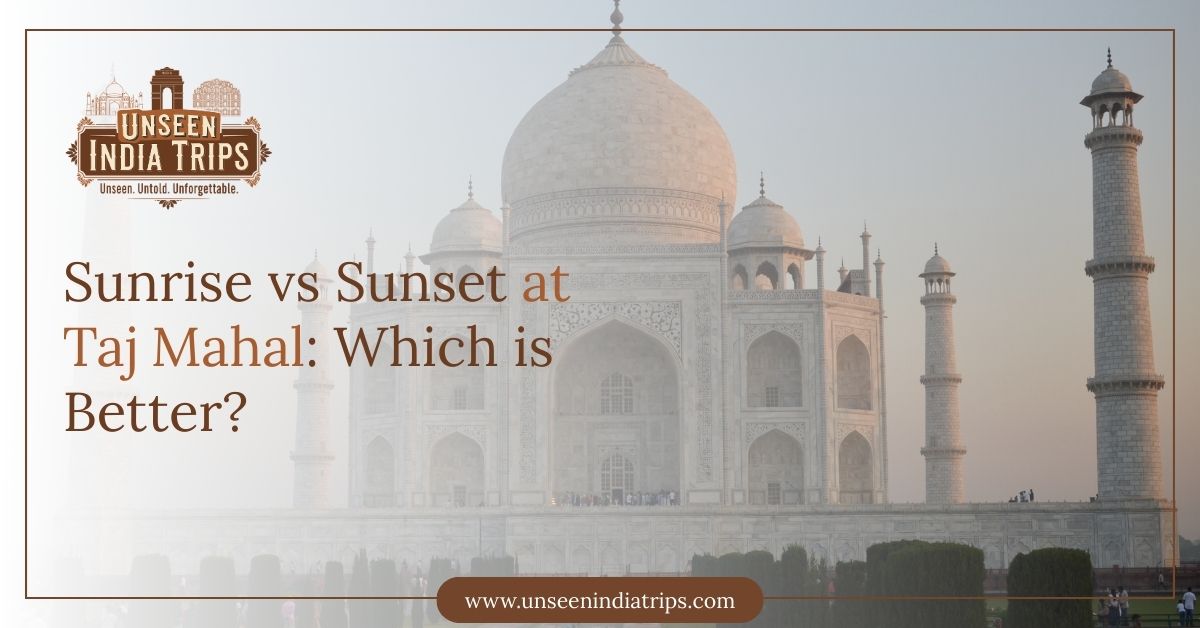
Sunrise at the Taj Mahal is an experience that transforms this marble monument into a living canvas of changing colours. As the sun breaks over the horizon, the white marble façade transitions through a spectacular palette—from soft pink to warm gold to brilliant white. This gradual transformation creates photography opportunities unmatched at any other time of day.
The monument opens at sunrise, and those first moments when light touches the dome are magical. The marble seems to glow from within, and the intricate inlay work becomes more visible as natural light gradually increases. Many photographers and serious travellers specifically choose sunrise for this unique spectacle, often arranging their Taj Mahal tour by car to arrive before dawn.
Fewer Crowds, More Intimacy
Perhaps the most compelling advantage of sunrise visits is the relatively sparse crowd. While the Taj Mahal attracts millions of visitors annually, early morning sees significantly fewer tourists compared to later hours. This means you can:
- Take photographs without dozens of people in your frame
- Experience moments of near-solitude in certain areas
- Walk through gardens and corridors without constant jostling
- Spend time absorbing the monument’s beauty in peaceful contemplation
The serene atmosphere fosters a more spiritual connection to this monument, built as an eternal testimony of love. You can hear the birds chirping in the gardens, and the quiet reverence of early visitors creates a meditative ambience that is impossible to find later in the day.
Practical Advantages
Agra’s climate, particularly during the summer months (April through September), becomes increasingly hot as the day progresses. Starting your visit at sunrise means exploring the complex in comfortable temperatures. By the time you finish your tour, temperatures are still manageable. This is especially important, as you’ll spend 2-3 hours walking through the extensive gardens and monuments.
The air quality is notably better in the early morning. Agra, like many Indian cities, experiences air pollution that worsens throughout the day as traffic and industrial activity increase. Sunrise offers clearer visibility for viewing the monument and taking photographs, with less haze obscuring distant views.
When planning a Taj Mahal tour by car from Delhi or nearby cities, an early start allows you to beat rush hour traffic. Most tour operators recommend departing between 3:00 and 4:00 AM for a sunrise visit, ensuring you arrive as the gates open around 6:00 AM (timing varies by season).
Photography Considerations
Professional photographers particularly favour sunrise for several technical reasons. The golden hour provides warm, directional light that enhances the marble’s texture and creates interesting shadows highlighting architectural details. The soft morning light reduces harsh contrasts, making it easier to capture well-exposed photographs without blown-out highlights or overly dark shadows.
The reflecting pool in front of the Taj Mahal is typically calmer in the morning, creating perfect mirror images. Even slight breezes that pick up later in the day can disturb these reflections, so sunrise offers the best chance for that iconic symmetrical photograph.
The Allure of Sunset at Taj Mahal
Evening Colours and Amber Hues
Sunset transforms the Taj Mahal into a monument bathed in warm, golden light. As the sun descends toward the horizon, the white marble takes on rich amber and orange tones, creating a romantic atmosphere entirely different from the morning’s soft pastels. The backlit dome appears to radiate light, and the lengthening shadows add drama and depth to photographs.
Many couples find the sunset more romantic, as the warm evening glow creates the perfect ambience for this monument dedicated to eternal love. The changing colours as daylight fades create a natural progression of photographic opportunities, from bright afternoon light to the intense colours of the golden hour, culminating in the monument silhouetted against twilight skies.
More Flexible Timing
Sunset visits offer greater scheduling flexibility when planning your Taj Mahal tour by car. You can depart from Delhi or other nearby cities at a reasonable morning hour, have a leisurely drive with stops for breakfast and lunch, explore Agra Fort or other attractions, and still arrive at the Taj Mahal in time for late afternoon entry.
This approach is less physically demanding, since you don’t have to wake up at 3:00 AM for an early departure. Families with children, elderly travellers, or those who simply aren’t morning people find sunset visits more comfortable and sustainable.
Extended Agra Exploration
Planning a sunset visit allows you to structure a full-day itinerary to explore Agra. You can visit Agra Fort in the morning when it’s less crowded, enjoy lunch at one of Agra’s excellent restaurants, perhaps visit Mehtab Bagh across the Yamuna River for a different perspective of the Taj, and then enter the main monument complex for sunset.
This pacing feels less rushed than trying to fit everything after a sunrise visit, though it does mean either staying overnight in Agra or driving back to Delhi after dark. Many Taj Mahal tour-by-car packages offer both options based on traveller preferences.
Social Atmosphere
While crowds are heavier during sunset hours, some travellers actually enjoy the more social atmosphere. You’ll encounter more international visitors, hear multiple languages, and experience the monument as a gathering place for global tourism. For some, this energy and excitement enhance rather than detract from the experience.
The gardens are typically well-maintained and beautifully lit as evening approaches. Staff presence is higher during the peak afternoon and evening hours, which some visitors find reassuring.
Comparing Photography Opportunities
Sunrise Photography Advantages:
- Softer, more diffused light
- Cooler colour temperature creates a serene mood
- Clearer air quality for sharper images
- A calmer reflecting pool for mirror images
- Fewer people to navigate around
- Better conditions for long exposures
Sunset Photography Advantages:
- Warmer, more dramatic light
- Rich golden tones in marble
- Stronger directional light creates defined shadows
- Opportunity for silhouette photography
- More dynamic sky colours during golden hour
- Potential for dramatic sunset skies as backdrop
Both times offer excellent photography, but the aesthetic is distinctly different. Sunrise produces ethereal, peaceful images while sunset creates dramatic, romantic photographs.
Weather and Seasonal Considerations
October through March: This peak tourist season offers pleasant weather for both sunrise and sunset visits. Mornings can be quite cool, especially in December and January, so a light jacket is recommended. Sunset visits are comfortable with warm afternoons and cool evenings.
April through June: Summer heat makes sunrise visits significantly more comfortable. Temperatures often exceed 40°C (104°F) by late afternoon, making sunset visits physically challenging despite the beautiful light. If visiting during the summer, sunrise is strongly recommended unless you handle heat extremely well.
July through September: Monsoon season brings humidity and occasional rain. Cloud cover can affect both sunrise and sunset views, though it can sometimes create spectacular, dramatic skies. Sunrise has the advantage of typically clearer morning skies, as afternoon clouds and showers are more common.
Making Your Decision
Choose Sunrise If You:
- Prioritise fewer crowds and a peaceful atmosphere
- Want the best photography conditions
- Are you visiting during the hot summer months
- Enjoy early morning experiences
- Want to see the monument’s colour transformation
- Plan to visit other attractions later in the day
Choose Sunset If You:
- Prefer not waking extremely early
- Want warmer, more dramatic lighting
- Are you visiting with family or less flexible travellers
- Enjoy the social energy of peak visiting hours
- Want to explore Agra Fort and other sites beforehand
- Find evening lighting more romantic
The Ideal Solution: Visit Both
If your schedule allows, consider experiencing both sunrise and sunset. Many travellers extending their Taj Mahal tour by car into an overnight stay choose this option. While it requires purchasing entry tickets twice, witnessing the monument at both times provides a complete understanding of how light transforms this masterpiece throughout the day.
You might visit at sunrise on your first day for photography and peaceful exploration, then return at sunset the following day for a different perspective. This approach also allows time to visit Agra Fort, Itimad-ud-Daulah (Baby Taj), and Mehtab Bagh, creating a comprehensive Agra experience.
Conclusion
Both sunrise and sunset offer magical experiences at the Taj Mahal, each with distinct advantages. Sunrise provides tranquillity, better photography conditions, and comfortable temperatures, while sunset offers scheduling flexibility, dramatic lighting, and a romantic atmosphere. Your choice ultimately depends on personal priorities, weather conditions, and overall travel itinerary.
When booking your Taj Mahal tour by car, discuss your preferred timing with your tour operator. Professional drivers and guides can offer valuable insights based on current conditions, crowd patterns, and your specific interests. Regardless of whether you choose dawn or dusk, witnessing this architectural masterpiece bathed in natural light remains one of travel’s most unforgettable experiences—a moment where human artistry and nature’s beauty combine to create something truly transcendent.